Poor ventilation shortens roof life, increases energy costs, and voids manufacturer warranties. Here is why it is especially critical in the Pacific Northwest.
A properly ventilated roof system draws outside air in through intake vents located at the eaves or soffits and exhausts it through vents at or near the ridge. This continuous airflow keeps the attic space close to the outside temperature in winter and prevents heat from building up in summer. The goal is a balanced system where the volume of air coming in at the bottom equals the volume leaving at the top.
The standard formula used by most building codes and shingle manufacturers requires one square foot of net free ventilation area for every 150 square feet of attic floor space, split roughly evenly between intake and exhaust. When this balance is achieved, the attic breathes. When it is not, moisture and heat accumulate with consequences that compound over time.
In drier climates, a ventilation deficiency mainly shows up as premature shingle aging from heat buildup in summer. That is a real problem, but it is a slow one. In the Greater Seattle area, the moisture component of the equation is what makes poor ventilation so damaging and so urgent to correct.
Homes in King County deal with elevated ambient humidity for most of the year. Interior moisture from cooking, bathing, and normal household activity migrates upward into the attic space. In a properly ventilated attic, that moisture-heavy air is continuously replaced with drier outside air. In a poorly ventilated attic, it accumulates. It condenses on the underside of the roof decking on cold nights and in cold months. That condensation, repeated night after night through a Pacific Northwest winter, saturates the plywood or OSB decking over time.
Saturated decking loses structural integrity, delaminates, and develops mold. When this damage is discovered at reroof time, it requires decking replacement in addition to the new roofing system. A ventilation problem that went unaddressed for years turns a standard reroof into a significantly more expensive project.
The temperature swing component matters as well. Seattle summers are warm and dry, winters are cool and wet. That seasonal swing is wider than it might appear and the transition between seasons puts additional stress on roofing materials. Proper attic ventilation reduces the temperature extremes that materials experience, which extends service life in both directions.
The most direct sign of a ventilation problem is moisture staining on the underside of the attic decking. If you can safely access your attic, look for dark staining, soft spots in the wood, or visible mold growth. These indicate that condensation has been occurring repeatedly.
Premature shingle aging is another indicator, though it is harder to diagnose without a professional inspection. Shingles on a poorly ventilated roof experience higher temperature extremes and age faster than the same product on a properly ventilated home. If your shingles are failing significantly earlier than the manufacturer's rated lifespan, ventilation is one of the first things to evaluate.
Ice damming at the eave is a classic sign of attic heat loss and poor ventilation in climates where it occurs. Greater Seattle does not freeze deeply enough to produce dramatic ice dams consistently, but in cold snaps the underlying cause is the same: heat escaping through a poorly insulated and poorly ventilated attic warms the roof deck, melts any snow or ice at the upper roof, and that water refreezes at the cold eave edge.
Higher than expected heating and cooling costs can also point to ventilation problems, because an attic that is not properly exchanging air will allow heat to build up in summer and allow cold air to chill the ceiling structure in winter, both of which increase energy loads.
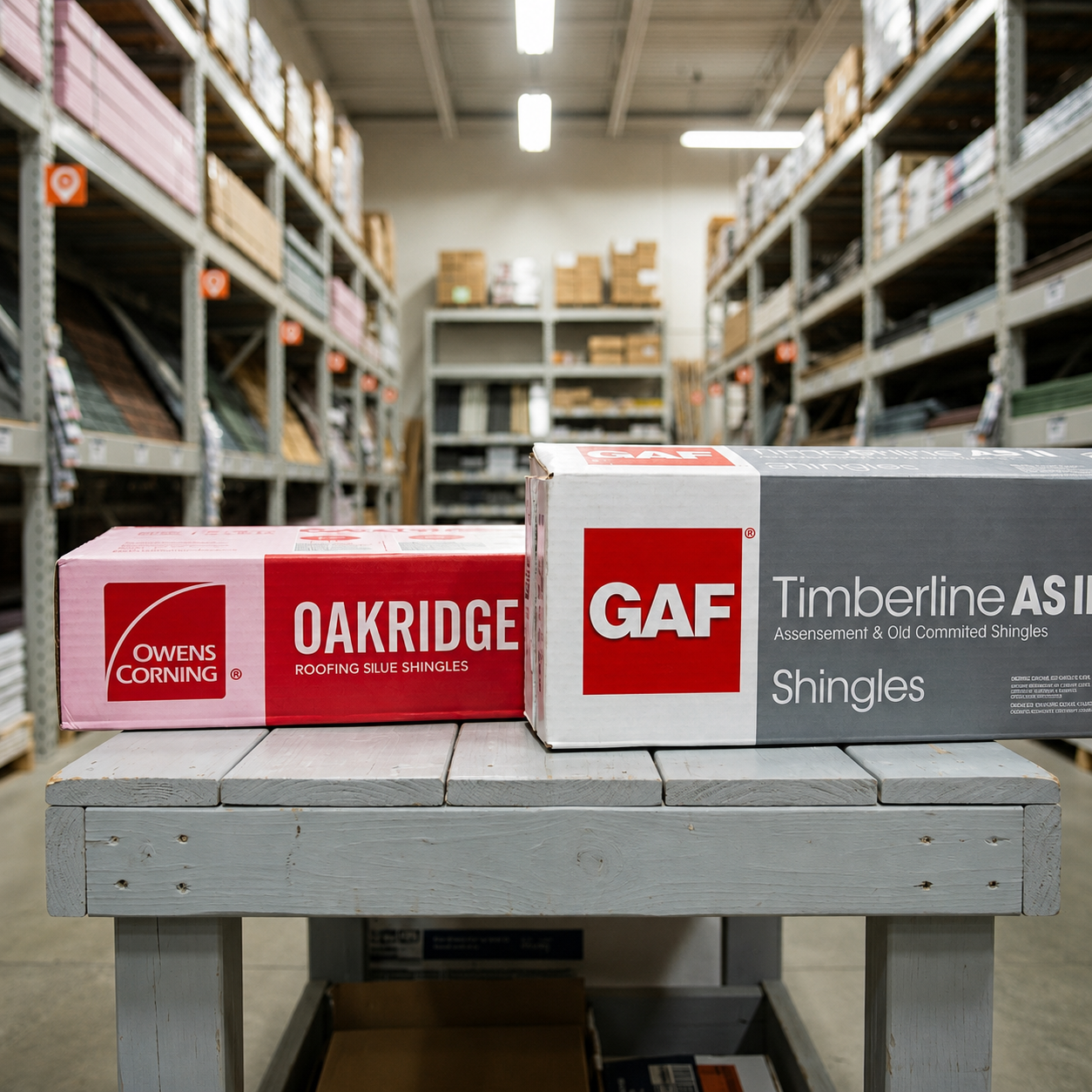
Most major shingle manufacturers including Owens Corning and GAF specify ventilation requirements as a condition of their product warranties. If a roof is installed on a home with inadequate attic ventilation and the shingles fail prematurely, the manufacturer can deny the warranty claim on the grounds that installation conditions were not met.
This is not a technicality that rarely comes up. It is a documented reason for warranty claim denial that affects real homeowners. A contractor who installs a new roof without evaluating and addressing ventilation adequacy is not protecting your investment even if the installation itself is technically correct.
On every Vantek reroof, we evaluate the existing ventilation system before the new installation begins. We calculate the net free area required for the attic size, compare it against what the existing soffit and ridge vents provide, and identify any deficiencies. If the existing ventilation is inadequate, we include the necessary upgrades in the project scope so the new roof is installed on a properly functioning system from day one.
Ridge vents are our standard exhaust solution on most homes. A continuous ridge vent runs the length of the ridge, provides uniform airflow across the entire attic, and is far more effective than box vents or turbine vents placed at intervals. Combined with adequate soffit intake venting, a continuous ridge vent creates the balanced system that manufacturers require and that your roof needs to reach its full rated service life in the Pacific Northwest.
Request a free estimate from Vantek Roofing. Call (425) 777-5031 or visit vantekroofing.com. We serve Bellevue, Kirkland, Renton, and 24 cities across King and Snohomish County.
| Vent Type | How It Works | Best Application |
|---|---|---|
| Ridge Vent | Continuous exhaust vent along the roof peak; allows warm moist air to escape | Standard on most pitched residential roofs |
| Soffit Vent | Intake vent along the underside of roof overhangs; brings cool dry air in | Used in combination with ridge vent |
| Power Attic Fan | Electrically powered exhaust fan; actively pulls air through attic | Supplement in homes with ventilation restrictions |
| Gable Vent | Louvered opening at the gable end; cross-ventilation approach | Older homes without ridge vent |
| Box Vent (Turtle Vent) | Individual exhaust caps installed in field of the roof | Common on older roofs; less effective than ridge vent |